
A Homemade ESP32 Smartwatch, Built So It Can't Spy On Anyone
Redditor CoreMemory_156 built a from-scratch smartwatch on a homemade PCB — heart rate sensor, Tetris clone, and all — specifically so they'd know exactly what their watch is doing.
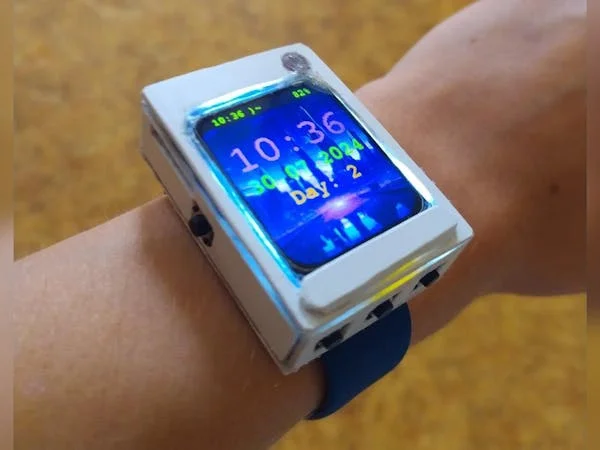
Shopping for a commercial smartwatch usually means comparing specs and reading reviews. Reddit user CoreMemory_156 skipped that step entirely and built a smartwatch from the ground up — partly for the challenge, and partly because a device you built yourself can’t quietly phone home with your data.
What They Built
The watch is built around an ESP32-WROOM-32D microcontroller on a homemade PCB, wired to a 240x280 LCD display, an accelerometer, a heart rate sensor, a real-time clock module, a vibration motor, and a speaker, all running off a 200mAh rechargeable battery in what appears to be a 3D-printed case on a wrist strap. It’s an oversized watch by commercial standards, but it covers a genuinely complete feature set for a first build.
How They Did It
Beyond the hardware basics, CoreMemory_156 has implemented several clock face styles, custom wallpaper support, a heart rate monitor app, a Tetris clone, a timer, a flashlight, and — for testing on the family dog, presumably — an ultrasonic blaster. Planned additions include a Pong clone, a temperature sensor, an ambient light sensor for automatic screen dimming, Bluetooth music control, and gyroscope-based games.
Why It’s Worth Your Time
There’s no formal build guide yet, but the bill of materials and photos shared in the original Reddit post give enough to work from if you want to attempt something similar — and the privacy angle is a different hook than most DIY smartwatch writeups, which tend to lead with hardware bragging rights rather than why you’d want to own your own data trail.
Go See It
Hackster covered CoreMemory_156’s build, crediting and linking the original Reddit post with the bill of materials and photos.
Comments
No comments yet — be the first.