A Drop-In Open-Source Brain for the Casio G-Shock
A replacement PCB and firmware fork turns a stock Casio G-Shock DW-5600 into a fully programmable, open-hardware watch.
TL;DR
A PCB swap mod for a DW-5600 G-Shock adds new features.
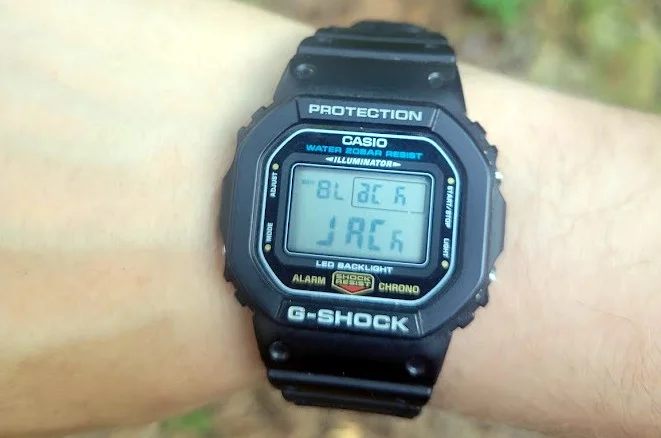
David Volovskiy’s “Jolt” project swaps the brain of a $20 Casio G-Shock for one you can actually program, without touching the case, display, or buttons that make the watch what it is.
What They Built
Jolt is a replacement circuit board sized to drop straight into a Casio DW-5600 series G-Shock in place of the stock quartz module. Once installed, the watch keeps its familiar segmented LCD and buttons, but everything behind them is now open hardware running open firmware — meaning anyone can flash their own watch faces, tools, or games onto a case that used to just tell the time.
How They Did It
Jolt builds on the firmware lineage started by Joey Castillo’s Sensor Watch and Movement projects, which did something similar for the Casio F-91W. Volovskiy forked that codebase and added board support for the G-Shock’s different LCD segment layout, then went further by building a browser-based firmware emulator and an LCD-segment “playground” tool, so a new watch face can be designed and tested before it ever touches real hardware. The project has matured to a tagged 2.0.0 release with a real catalog of faces beyond basic clock/stopwatch/alarm functions, including a blackjack game, a Wordle clone, an endless runner, Simon, and a tarot card face — the kind of feature list you’d expect from a hobby OS, not a watch.
Why It’s Worth Your Time
Most “hacked watch” projects work around stock hardware. This one replaces it outright while keeping the part people actually care about — the case and display — fully intact, which is a cleaner way to turn cheap, ubiquitous hardware into a real development platform.
Go See It
David Volovskiy documented the project on GitHub at voloved/second-movement, an MIT-licensed fork of joeycastillo/second-movement; the repo has full build instructions, release notes, and the watch face source. Hackaday covered the project on June 23, 2026, with additional background on how it fits into the broader Sensor Watch ecosystem.
Comments
No comments yet — be the first.