LightInk Is A Solar-Powered Smartwatch That (Almost) Never Needs Charging
Daniel Ansorregui's ESP32 smartwatch pairs a built-in solar panel with e-paper and a clever RTC-memory boot trick to stretch run time to months.
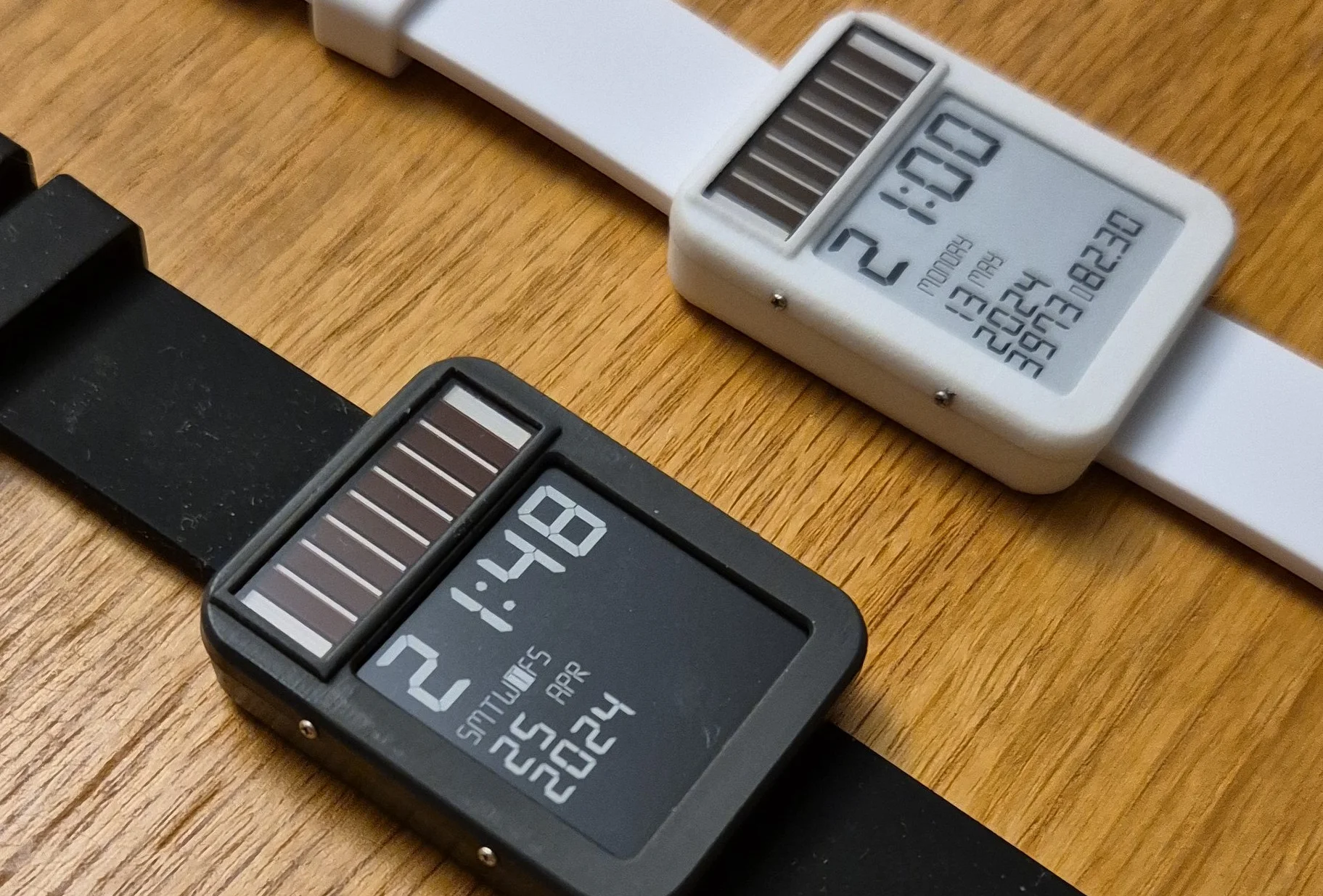
Daniel Ansorregui’s LightInk takes the e-ink-plus-ESP32 smartwatch formula popularized by Watchy and adds a built-in solar panel, then squeezes out enough extra power efficiency to make that panel actually meaningful.
What They Built
LightInk is a wrist-worn smartwatch built around an ESP32-PICO and a 1.54-inch e-paper display, with WiFi, Bluetooth, LoRa, and GPS on tap and a small solar cell built into the face. It runs on a 100mAh battery, but thanks to the solar assist and aggressive power management, it’s designed to go roughly 9 to 10 months between charges under normal use.
How They Did It
E-ink already does most of the power-saving work just by only drawing current during a screen update, but Ansorregui found that booting the ESP32 itself was eating a surprising share of the budget: a normal cold boot takes about 28 milliseconds and burns roughly a milliamp-second of charge, mostly just copying code from flash into RAM before any useful work happens. His fix was to skip that step entirely for routine wake-ups, using the ESP32’s RTC memory — a small pool of memory the chip can execute from in microseconds, without touching flash at all. By reimplementing the SPI display driver to run from RTC memory, the watch can wake, push an update to the screen, and go back to sleep in under a millisecond of active time, cutting overall power use roughly in half. The pricier radios — LoRa and GPS in particular — are treated as occasional-use features rather than always-on, since they’re where the remaining power budget actually goes.
Why It’s Worth Your Time
The RTC-memory wake-stub trick isn’t specific to watches — it’s a general pattern for any battery-powered ESP32 project where the bulk of your power draw is wasted on boot overhead rather than the actual work being done.
Go See It
Daniel Ansorregui’s full hardware and firmware files are on GitHub, including the ESP-IDF source, EasyEDA design files, and 3D-printable case models. Hackaday covered the project on May 5, 2026, and a demo video on the project page shows the watch’s full feature set in action.
Comments
No comments yet — be the first.