
Making A Mechanical Watch Movement From Scratch, Right Down To The Pinions
John Raffaelli machined nearly every part of a working mechanical watch movement himself, buying only the jewels, crystal, strap, hairspring, and mainspring.
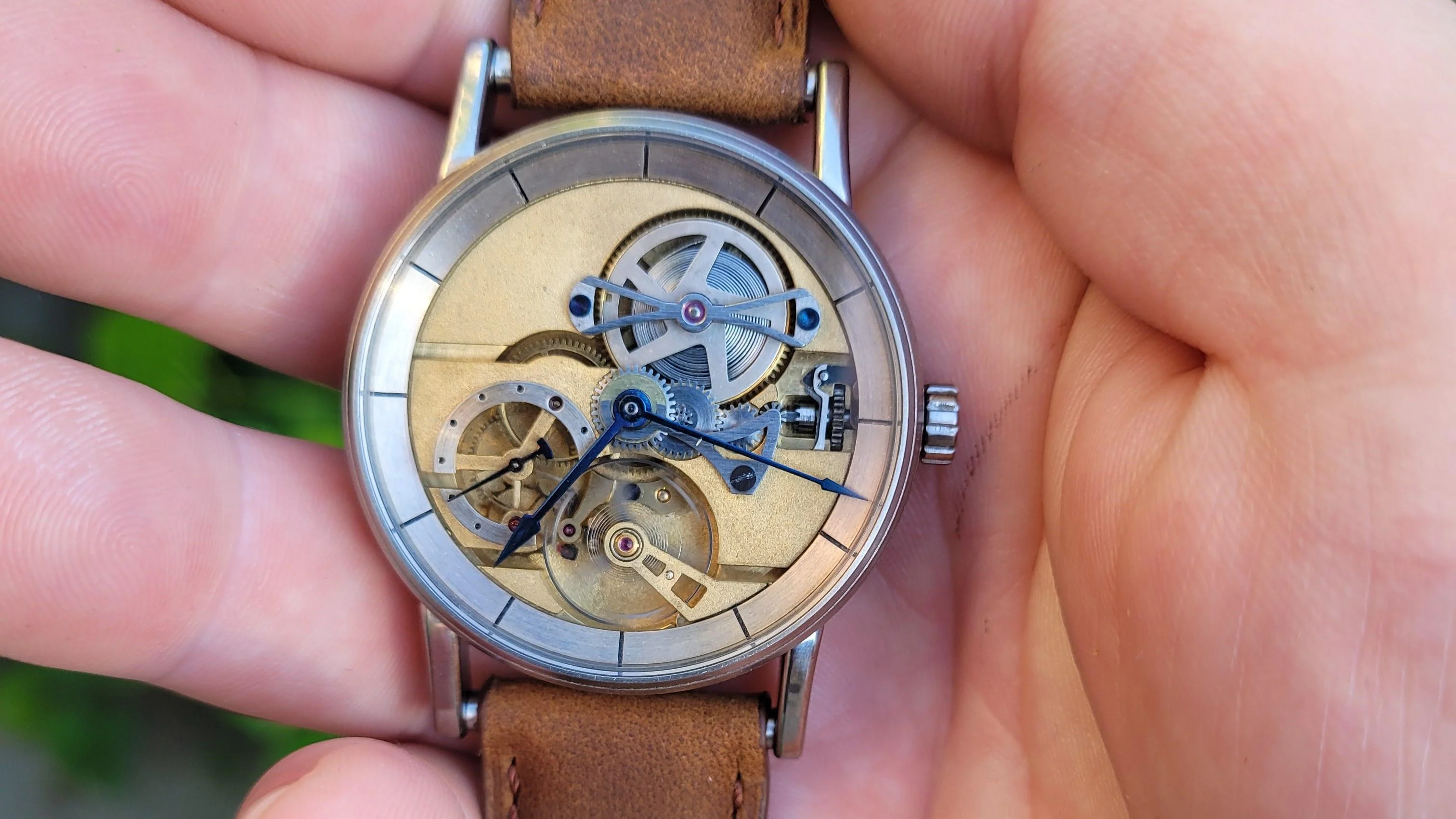
Most of the watches we cover here lean on a microcontroller and a display. John Raffaelli’s project is the opposite extreme: no firmware, no electronics, just a fully hand-machined mechanical watch movement built on his own machine tools.
What They Built
Raffaelli set out to build a working mechanical watch movement from raw stock, limiting his bought parts to the handful of things that are genuinely impractical to make at home: jewels, the sapphire crystal, the strap, the hairspring, and the mainspring. Everything else — gear trains, pinions, the balance wheel, plates and bridges — he cut himself, at a scale where features are smaller than a fingertip and tolerances leave essentially no room for error.
How They Did It
This is precision machining at the limit of what a home shop can manage: parts this small require careful work holding, sharp tooling, and a willingness to scrap a piece and start over when a cut goes even slightly wrong. There’s no firmware to patch a mistake after the fact — a pinion cut a few microns off either works or it doesn’t.
Why It’s Worth Your Time
It’s a useful counterweight to a batch of builds otherwise dominated by ESP32 boards and touchscreens: a reminder that “build your own watch” can mean building the actual mechanism that keeps time, not just the case and display around someone else’s movement.
Go See It
Hackaday’s writeup on John Raffaelli’s movement has more detail and photos of the machining process.
Comments
No comments yet — be the first.